Physicist &
ML Researcher
PhD candidate studying generative models for physical systems and building foundation models for science.
University of Toronto, Vector Institute, Berkeley Lab (NERSC)
PhD advised by Yoni Kahn, committee: David Curtin & Chris Maddison
NERSC advised by Wahid Bhimji, Benjamin Nachman, Aishik Ghosh
Physics for AI, AI for Physics.
Select Papers
-
arXiv preprint, 2026Studied optimal pre-training objectives for scientific foundation models when accurate simulators can produce labeled data at scale. Is self-supervision superior for downstream tasks when not necessary?
-
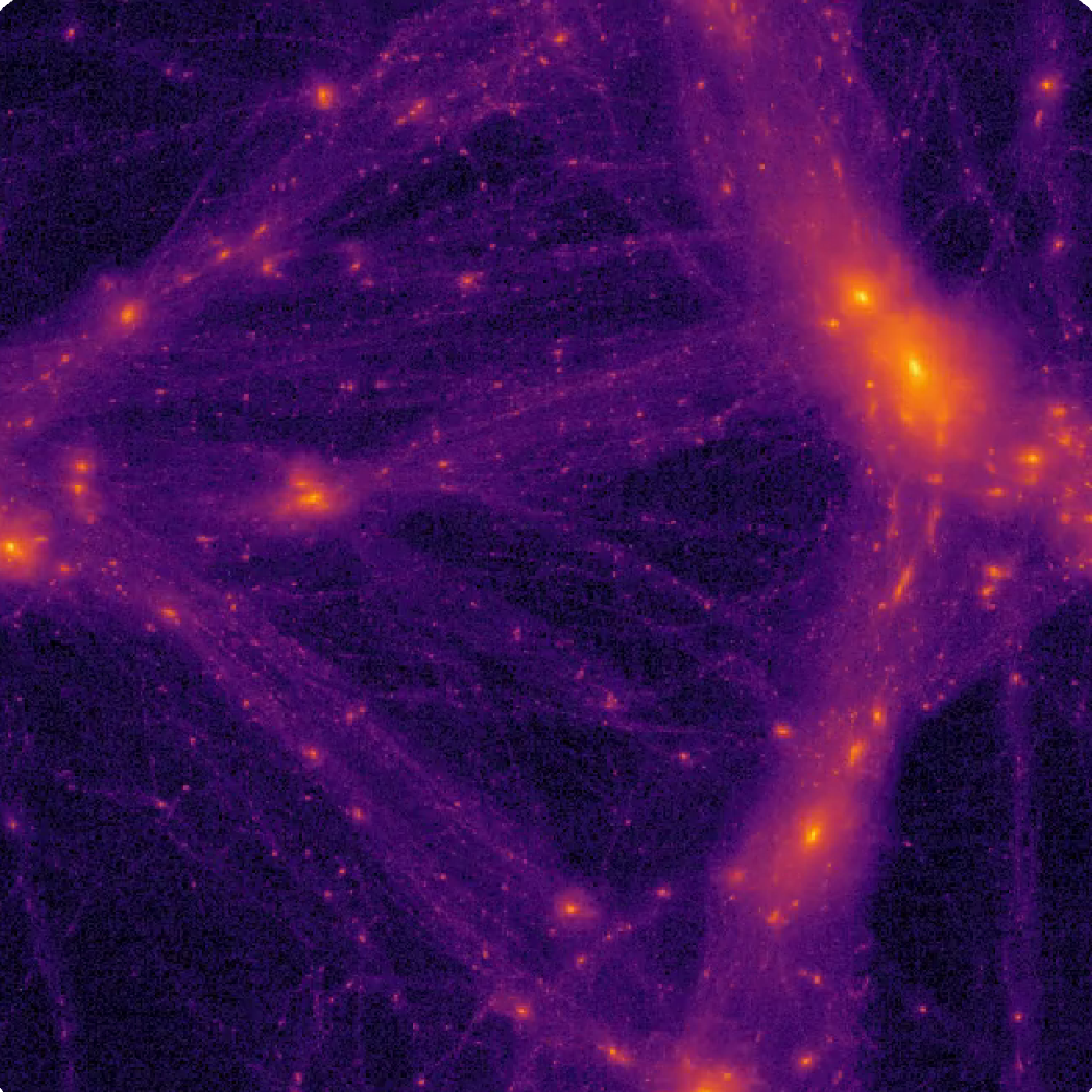
arXiv preprint, 2026A hierarchical point-cloud native surrogate of dark-matter-only cosmological simulation, that achieves an up-to-500x speedup over traditional sims, while producing accurate physical observables. We demonstrate Astrolabe's ability to scale by emulating a simulation of 150 million particles and demonstrate Astrolabe's ability to generalize by applying it to out-of-distribution dark matter models.
-
The Omni family: cross-domain scientific foundation modelsTransferring particle-physics knowledge to molecular dynamics and cosmology.
-
The method behind the first-place solution to the FAIR Universe HiggsML Uncertainty Challenge.
-
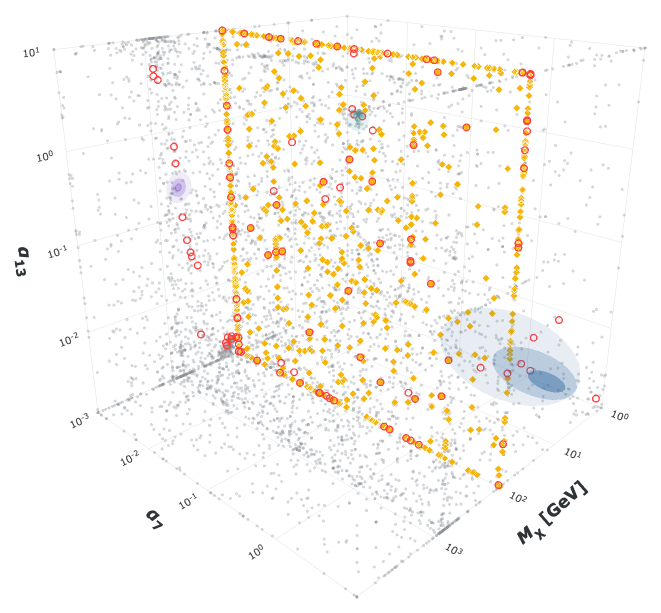
arXiv preprint, 2026Developed Large Lagrangian Model RL agents for finding non-excluded Beyond-Standard-Model experimental signatures when coupled to swarms of LLM agents.
-
Machine Learning: Science and Technology 6(3):035040, 2025Derived and empirically validated an effective-field-theory description of neural networks that predicts initialization-driven ensemble variance from first principles, without training an ensemble.
Research Focus
Physics Data for Understanding ML
Leveraging the controllable generation and known symmetries of physics datasets to probe the internal mechanisms of deep neural networks.
Physics-Inspired Theory for Scaling Laws
Using effective field theory to predict neural-network ensemble behavior and derive uncertainty scaling laws without training an ensemble.
AI for New Physics Search
Theory parameter estimation with uncertainty quantification, simulation emulation, and automating the search for experimental signatures.
Foundation Models for Scientific Point Clouds
Foundation models for scientific point clouds that transfer knowledge across particle physics, cosmology, and molecular dynamics.